

In the digital age, data centers are the backbone of global connectivity, powering everything from cloud storage to AI applications. As data volumes explode and server densities skyrocket, data center cooling systems have become critical to ensuring equipment reliability, reducing energy consumption, and maintaining optimal performance.
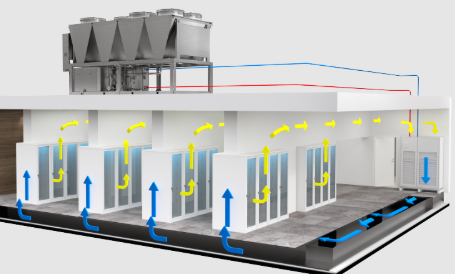
A poorly designed cooling system can lead to overheating, equipment failure, and sky-high operational costs—making it essential to understand the different types of cooling solutions, their ideal use cases, emerging trends, and how to select the perfect fit for your facility.
Types of Data Center Cooling Systems and Their Ideal Scenarios
Not all data center cooling systems are created equal. The right choice depends on factors like data center size, server density, location, and energy efficiency goals. Below are the most common types, along with their key features and ideal applications.
1. Air-Cooled Systems: Traditional and Cost-Effective
Air-cooled systems are the most widely used cooling solutions, leveraging air as the primary medium to dissipate heat from IT equipment. They are divided into two main subcategories:
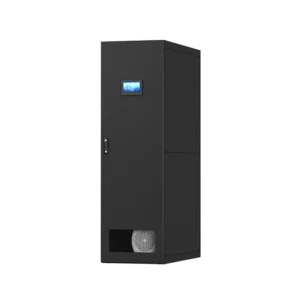
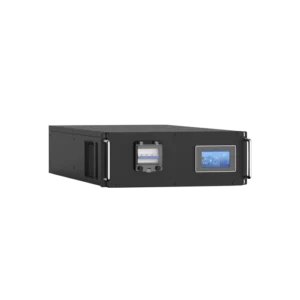
- Computer Room Air Conditioners (CRAC): These units use direct expansion cooling with refrigerant to remove heat from the data center environment. CRAC systems are compact, easy to install, and cost-effective for small to medium-sized facilities. They are ideal for data centers with low to moderate server density (≤10kW per rack) and limited space for complex cooling infrastructure, such as small colocation centers or on-premises data rooms. However, they are less efficient for large-scale facilities due to higher energy consumption.
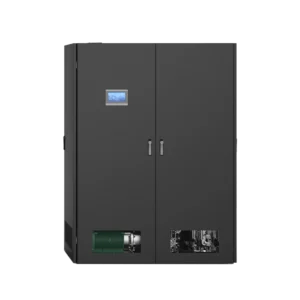
- Computer Room Air Handlers (CRAH): Unlike CRAC units, CRAH systems use chilled water from an external chiller to cool the air, making them more scalable and efficient for larger data centers. They are preferred for hyperscale facilities, colocation centers, and data centers with high cooling loads, as they can handle higher server densities (up to 15kW per rack) and integrate seamlessly with centralized chilled water systems. CRAH units also contribute to better energy efficiency compared to CRAC systems, especially when paired with free cooling technologies.
Air-cooled systems also include room-level cooling (PUE 1.6-2.0), cold channel containment (PUE 1.4-1.6), and row-level/backdoor heat exchange (PUE 1.3-1.4), which are optimized for different density needs—from low-density traditional IDCs to medium-density enterprise data centers.
-

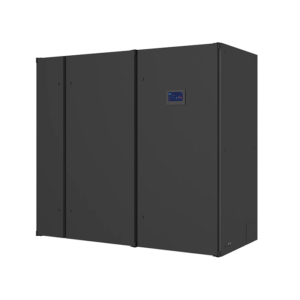
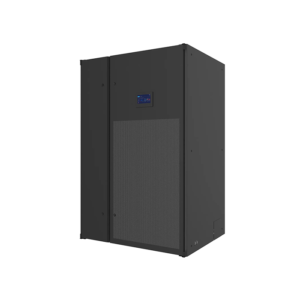
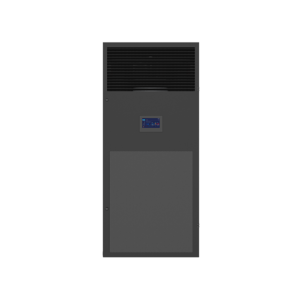
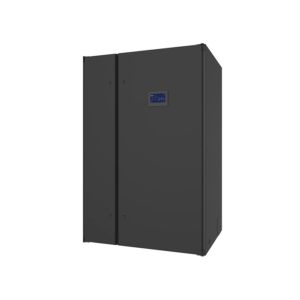
Sistema de arrefecimento de salas com água gelada SOETECK, capacidade 38,2kW-265,8kW
-
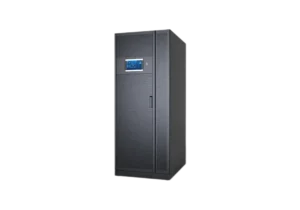
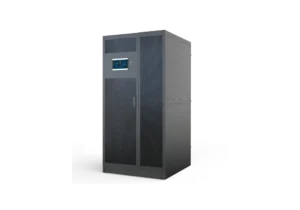
Sistema de arrefecimento ambiente SOETECK DX arrefecido a ar, capacidade 32,5kW-120kW, fluxo ascendente/descendente
-
Sistema de arrefecimento ambiente SOETECK DX arrefecido a ar, capacidade de 7,5kW-27,5kW
-
Sistema de arrefecimento ambiente SOETECK DX arrefecido a água, capacidade 32,5kW-122,9kW
2. Liquid-Cooled Systems: High-Efficiency for High-Density Loads
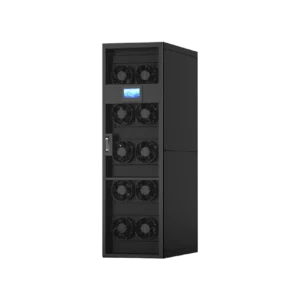
As AI and high-performance computing (HPC) drive server densities to 50kW per rack or higher, liquid-cooled systems have emerged as the go-to solution for extreme heat loads. Liquids have a much higher heat capacity than air (water’s heat capacity is three times that of air), making them far more efficient at dissipating heat from dense IT equipment. The main types include:
- Arrefecimento líquido por placa fria: This is the most common liquid-cooled solution, using custom cold plates attached to CPUs, GPUs, and other high-heat components. Coolant circulates through the cold plates, absorbing heat and transferring it to a heat exchanger. Cold plate systems are ideal for medium to high-density data centers (30-50kW per rack), such as AI inference clusters, carrier intelligent computing centers, and mid-sized IDCs. They are compatible with standard servers, easy to retrofit, and offer a balance of efficiency and cost-effectiveness (PUE 1.05-1.15).
- Arrefecimento por imersão: In this solution, servers are fully submerged in non-conductive, dielectric coolant, which directly cools all components. Immersion cooling is divided into single-phase (mineral oil or synthetic hydrocarbons) and two-phase (low-boiling fluorinated fluids) variants, with the latter offering even higher efficiency. It is the ultimate solution for ultra-high-density facilities (≥50kW per rack), such as supercomputing centers, AI training clusters, and Nvidia Rubin dedicated clusters. Immersion cooling eliminates hotspots, reduces noise (to <50dB), extends equipment life by 30%, and achieves PUE as low as 1.03-1.06.
- Hybrid Liquid-Air Cooling: This combines air-cooled and liquid-cooled technologies, using air cooling for low-density areas and liquid cooling for high-density zones. It is ideal for mixed-use data centers (e.g., general computing + AI workloads) and legacy facilities undergoing upgrades, as it allows for smooth transitions and optimizes energy efficiency across diverse loads (PUE 1.15-1.25).
3. Evaporative Cooling Systems: Eco-Friendly for Moderate Climates
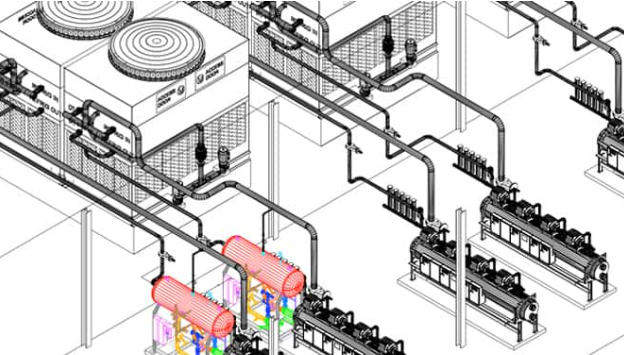
Evaporative cooling systems use the natural process of water evaporation to cool the air, making them highly energy-efficient and eco-friendly. They are often used as a secondary cooling solution or in conjunction with chilled water systems. A typical evaporative cooling setup includes a cooling tower, where condenser water carries heat from the chiller and dissipates it to the atmosphere through evaporation. These systems are ideal for data centers located in dry, moderate climates (e.g., parts of North America, Europe, and Asia) where outdoor air is cool and dry. They reduce energy consumption by leveraging free cooling, but require careful water management to maintain efficiency—measured by Water Usage Effectiveness (WUE).
4. Edge Data Center Cooling Systems: Compact and Adaptive
Edge data centers, which are small, distributed facilities located close to end-users, face unique cooling challenges due to their compact size, high density, and heterogeneous hardware. Solutions like CoolEdge+—a component-level water cooling system—dynamically adjust inlet water temperature and use vapor chamber-based cold plates to mitigate hotspots. These systems are designed for edge facilities with power ratings of tens to hundreds of kilowatts, reducing cooling energy consumption by up to 27.19% compared to traditional coarse-grained cooling strategies.
Future Trends of Data Center Cooling Systems
The future of data center cooling systems is driven by three key priorities: energy efficiency, sustainability, and adaptability to emerging technologies like AI and edge computing. Below are the most impactful trends shaping the industry:
1. Liquid Cooling Dominance in High-Density Environments
As AI and HPC workloads continue to push server densities to 100kW per rack or higher, liquid cooling will become the standard for high-performance data centers. According to HPE, liquid cooling can reduce carbon footprints by 87% and operational costs by 86% compared to air cooling. Additionally, high-temperature liquid cooling (45-60℃ inlet water) will gain traction, as it extends free cooling periods by 80% and maximizes waste heat recovery potential.
2. AI-Driven Intelligent Cooling
AI and machine learning are transforming cooling system management. Predictive control frameworks—integrating IoT sensor data with reinforcement learning (RL) and LSTM neural networks—enable real-time optimization of cooling operations. These systems anticipate cooling demand, adjust airflow and temperature setpoints dynamically, and reduce cooling energy use by 15-25% compared to traditional rule-based controls. AI also helps monitor hotspots, predict equipment failures, and optimize PUE (Power Usage Effectiveness), a key metric measuring data center energy efficiency (ideal PUE is 1.0, with leading facilities approaching this benchmark).
3. Waste Heat Recovery and Energy Symbiosis
Data centers are evolving from “energy hogs” to “energy hubs” through waste heat recovery. Liquid cooling systems generate warm water (45-65℃), which can be repurposed for district heating, industrial processes, agricultural greenhouses, and even fish farming. For example, NREL recovers 90% of waste heat from its HPE Cray liquid-cooled supercomputer to heat offices and labs, while QScale plans to use waste heat to power 100 football field-sized greenhouses. This trend not only reduces carbon emissions but also creates new revenue streams for data center operators.
4. Edge Cooling Innovation
With the rapid growth of edge computing (projected to reach $182 billion by 2032), cooling solutions for edge data centers will become more compact, adaptive, and energy-efficient. Component-level cooling, like CoolEdge+, and modular cooling systems will dominate, as they can handle heterogeneous hardware and dynamic workloads while fitting into tight spaces. Edge cooling will also integrate with renewable energy sources (e.g., solar, wind) to achieve off-grid operation in remote areas.
5. Green Cooling and Carbon Neutrality
Sustainability will remain a top priority, with data center operators aiming for carbon neutrality. This includes using renewable energy to power cooling systems, adopting eco-friendly coolants (e.g., non-toxic, biodegradable fluorinated fluids), and optimizing WUE to reduce water consumption. Governments and regulatory bodies are also pushing for stricter efficiency standards, driving the adoption of green cooling technologies across the industry.
How to Choose the Right Data Center Cooling System
Selecting the right data center cooling system requires a holistic assessment of your facility’s needs, goals, and constraints. Follow these steps to make an informed decision:
Step 1: Evaluate Your Core Requirements
- Server Density: Low-density facilities (≤10kW per rack) can use CRAC units or basic air cooling. Medium-density (10-30kW per rack) benefits from CRAH systems or cold plate liquid cooling. High-density (≥30kW per rack) requires immersion cooling or hybrid liquid-air solutions. AI and HPC facilities (≥50kW per rack) should prioritize immersion cooling.
- Facility Size and Location: Small data centers or edge facilities are best served by compact, easy-to-install systems (CRAC, component-level liquid cooling). Large hyperscale or colocation centers benefit from scalable CRAH or centralized liquid cooling systems. Climate also matters—evaporative cooling is ideal for dry regions, while liquid cooling is better for hot, humid areas where air cooling is inefficient.
- Energy Efficiency Goals: If reducing PUE is a priority, opt for liquid cooling (PUE 1.03-1.15) or evaporative cooling. AI-driven controls can further optimize energy use by 15-25%. For carbon neutrality, prioritize systems compatible with waste heat recovery and renewable energy.
Step 2: Analyze Cost and Lifecycle Considerations
While air-cooled systems have lower upfront costs, liquid-cooled systems offer long-term savings through reduced energy and maintenance costs. For example, a data center with 10,000 liquid-cooled servers can save nearly $2.1 million annually in operational costs compared to air-cooled servers. Consider upfront installation costs, ongoing energy bills, maintenance requirements, and equipment lifespan when comparing solutions. Immersion cooling has higher upfront costs but lower long-term costs, while CRAC systems are cheaper initially but less efficient over time.
Step 3: Consider Compatibility and Scalability
Ensure the cooling system is compatible with your existing IT equipment and infrastructure. For legacy facilities, cold plate liquid cooling is easier to retrofit than immersion cooling. If you plan to expand your data center or increase server density, choose a scalable solution (CRAH, hybrid cooling, or modular liquid cooling) that can grow with your needs. Avoid systems that lock you into a single vendor or require major infrastructure overhauls for upgrades.
Step 4: Prioritize Reliability and Maintenance
Data center cooling systems must operate 24/7 to prevent equipment failure. Choose systems with proven reliability (e.g., HPE’s liquid cooling solutions with 50+ years of experience) and easy maintenance. Air-cooled systems require regular filter changes and fan maintenance, while liquid-cooled systems need coolant monitoring and leak detection. Immersion cooling has lower maintenance needs due to fewer moving parts and reduced dust accumulation.
Step 5: Align with Compliance and Sustainability Standards
Ensure your cooling system meets local regulations and industry standards (e.g., ASHRAE guidelines for data center temperatures). For sustainability, choose systems that reduce carbon emissions, minimize water use (optimize WUE), and support waste heat recovery. Look for eco-friendly coolants and energy-efficient components to align with corporate sustainability goals and regulatory requirements.
Data center cooling systems are no longer just a “support function”—they are a strategic investment that impacts reliability, efficiency, and sustainability. By understanding the different types of cooling solutions, their ideal use cases, and emerging trends, you can select a system that aligns with your facility’s needs and long-term goals. Whether you’re operating a small edge data center, a mid-sized enterprise facility, or a large hyperscale campus, the right cooling system will help you reduce costs, minimize environmental impact, and ensure your IT equipment runs at peak performance.