
联系我们

我需要一台行内精密空调吗?

分享给

Traditional perimeter cooling relies on pushing chilled air across an entire room, hoping enough of it reaches the equipment that needs it most. When your rack density crosses the 8–10 kW threshold, this approach breaks down. Air mixes, hot spots form, and your cooling system works harder while achieving less.

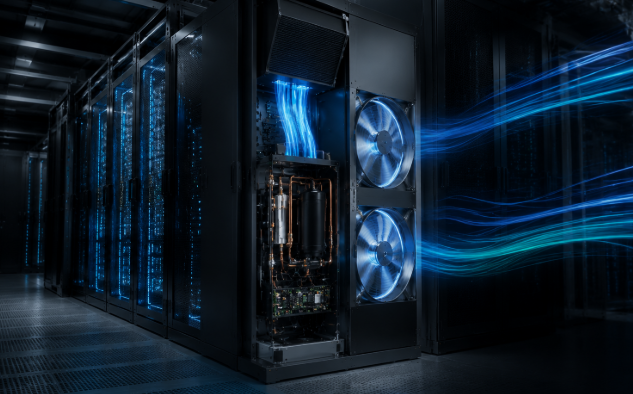
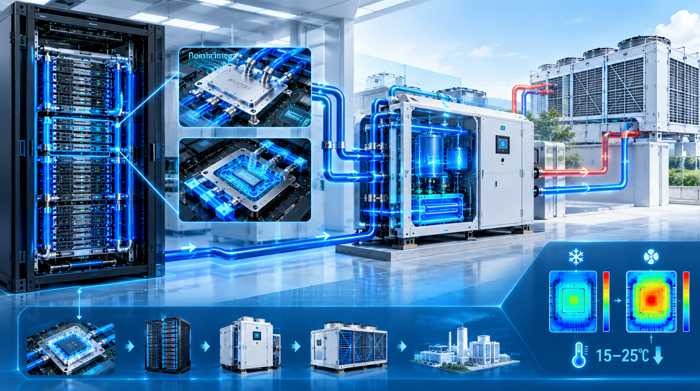
An in-row precision air conditioner solves this by eliminating distance. When you place these units directly between server racks—in the same row as the heat source—they deliver cooled air straight into the cold aisle with almost no travel path. A 2022 experimental study published through Harvard ADS documented the result: row-based in-row cooling packages reduced cooling energy consumption by 43.5%, driving PUE from 1.563 down to 1.361. The cooling subsystem contributed a partial PUE of just 0.019.

What this means for your operation is straightforward. You stop paying to move air across unnecessary distances. You stop losing cooling capacity to mixing and bypass. And you gain the ability to cool racks on a per-row basis rather than over-provisioning an entire room for a handful of dense cabinets.

Edge Computing Demands Your In-Row Precision Air Conditioner

Your edge computing sites share almost nothing in common with a centralized data hall. A micro data center deployed on a factory floor, in a retail back office, or inside a remote telecom shelter operates in a space-constrained, non-standard environment with no raised floor and no CRAH plant. Your cooling solution must be self-contained, compact, and capable of handling variable loads without constant human intervention.

This is where an in-row precision air conditioner becomes critical. With unit widths as narrow as 300 millimeters, you can integrate these systems directly into a sealed rack enclosure, cooling only the air circulating within that contained space. You do not need to condition the ambient environment—just the IT equipment itself.

The ResearchAndMarkets.com report identifies modular edge deployments as a primary growth driver, noting compatibility extending to containerized environments. For your distributed infrastructure, you can standardize on one cooling architecture across dozens of sites.

AI and GPU Clusters Need Targeted In-Row Precision Air Conditioning

If your organization is deploying GPU clusters for AI training or inference, you already know that the thermal profile of these workloads is unlike anything traditional IT cooling was built to handle. A single NVIDIA H100 node can draw 700 watts. A fully populated GPU rack easily exceeds 30 kW. Worse, the heat load is not steady—it spikes during training runs and drops during data loading phases.

An in-row precision air conditioner with an inverter-driven compressor addresses this variability directly. Instead of cycling on and off, the inverter modulates cooling output continuously, matching your real-time heat load with near-zero lag. High-efficiency EC fans provide the same dynamic adjustment on the airflow side, ramping based on actual demand rather than fixed setpoints.

In-Row Precision Air Conditioner

For your AI infrastructure, this means you eliminate thermal runaway risk from sudden GPU workload spikes while avoiding the energy waste of constant-speed cooling against an intermittently idle load. R410A refrigerant provides the thermodynamic efficiency to sustain high-heat-flux operations without exceeding environmental compliance thresholds.

Modular and Prefabricated Data Center Builds

You no longer need to design a data center as a single monolithic building with a 20-year capacity forecast. Organizations increasingly adopt a phased model where capacity is added in modular blocks—racks, containment, and dedicated cooling.

Your in-row precision air conditioner aligns perfectly. Because cooling deploys at the row level rather than the room level, you commission thermal capacity only when and where you commission IT capacity. No central plant running at partial load for years while the data hall fills up. Each new row brings its own self-contained cooling loop, sized precisely to its equipment.

This incremental approach also simplifies your maintenance and redundancy planning. If one row’s cooling unit requires service, the remaining rows continue operating independently. You are not taking an entire data hall offline for a single component failure.

Telecom 5G Edge and In-Row Precision Air Conditioning

The rollout of 5G networks has triggered a massive wave of distributed compute deployment. Central offices, aggregation sites, and cell tower shelters are being retrofitted with IT equipment never part of the original facility design. These environments are sealed, dust-proof enclosures with no chilled water infrastructure, and you need cooling that works within these constraints.

A direct-expansion air-cooled in-row precision air conditioner fits this scenario precisely. The entire refrigeration cycle is self-contained—no chilled water plant, no cooling tower. Optional long piping kits let you place the outdoor condenser at a practical distance even when the indoor unit sits deep within a shelter.

The CAN bus networking capability further strengthens this use case. Up to 32 units can be grouped and managed as one logical cooling system through a single interface—critical when your telecom sites are unmanned and you depend on remote monitoring.

Why Your In-Row Precision Air Conditioner Outperforms Traditional Cooling

By now the pattern should be clear: the fundamental advantage of an in-row precision air conditioner over perimeter cooling is eliminating the distance between your cooling source and your heat source.

In a room-based layout, chilled air travels meters from a perimeter unit, under a raised floor, up through perforated tiles—mixing with warmer air at every stage. By the time it reaches the top of your 42U rack, supply air temperature can be several degrees higher than what left the unit. An in-row configuration places cooling directly adjacent to the rack, reducing your air delivery path from meters to centimeters.

The sensible heat ratio tells you the rest of the story. A high-quality in-row precision air conditioner operates above 95% sensible heat ratio, meaning nearly all cooling capacity goes toward lowering air temperature rather than removing moisture. Your electronic equipment needs temperature control, not dehumidification. Perimeter units often dip into latent cooling, wasting energy on condensation your servers never needed removed.

Selecting the Right In-Row Precision Air Conditioning for Your Deployment

Not all in-row precision air conditioning solutions are interchangeable, and matching the unit to your deployment scenario determines whether you capture the architectural advantages described above. Capacity range is your first filter. Systems spanning 5.6 kW to 90.1 kW cover everything from a single edge cabinet to a fully populated high-density row—but only if the unit you select offers the full breadth of that range without forcing you into a different platform at the high end.

Compressor technology matters equally. An inverter compressor with dynamically modulated cooling handles variable heat loads without short-cycling—an issue that degrades both temperature stability and compressor lifespan. If your deployment involves AI training clusters or any workload with fluctuating power draw, fixed-speed compressors will cost you in energy and hardware longevity.

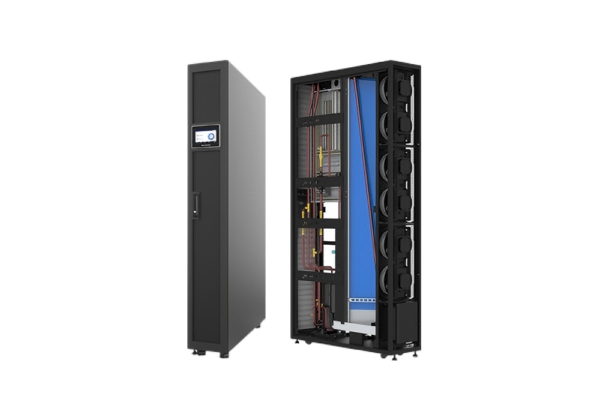
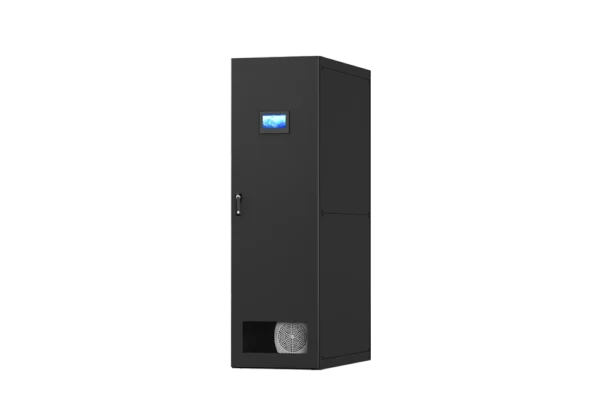
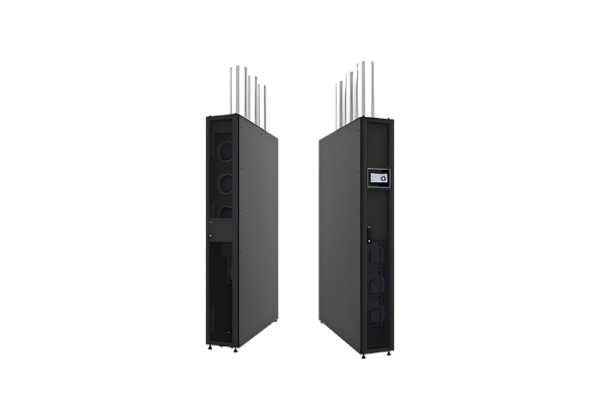
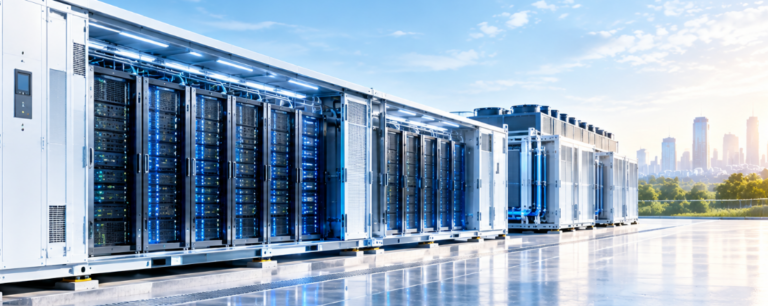
Like the SOETECK DX air-cooled in-row cooling system, which covers the full 5.6 kW to 90.1 kW spectrum with inverter-driven compression and EC fan technology across 300 mm, 600 mm, and 900 mm width configurations, give you the flexibility to match cooling precisely to each row’s density without over-engineering or under-provisioning. BMS integration via precision controllers ensures that whatever you deploy at the rack level feeds cleanly into your facility-wide monitoring and automation stack.

Your In-Row Precision Air Conditioner: The Scenario Decides

You do not need an in-row precision air conditioner in a 3-kW-per-rack office server closet. Traditional split systems or passive ventilation may suffice. But when your racks cross into medium and high density, when your deployment moves beyond the raised-floor data hall, or when your workloads begin fluctuating in ways fixed-speed cooling cannot track—the architectural decision becomes clear.

The data supports what the engineering logic tells you. Row-based cooling delivers PUE improvements of 0.2 or more in documented deployments, representing hundreds of thousands of dollars in annual energy savings at scale. The market trajectory heading toward $2.09 billion by 2032 confirms operators are voting with their procurement budgets.

Matching your cooling architecture to your actual deployment scenario is not just an efficiency play. It determines whether your infrastructure can sustain the densities, variability, and geographic distribution modern compute demands. Your in-row precision air conditioner bridges that gap—but only when you apply it where its design logic is fully realized.

关于作者

加文

加文

Gavin 是一家专门从事数据中心配套设备的公司的运营经理。他精通数据中心专用不间断电源、精密空调和数据中心解决方案。他可以帮助您更好地了解这些产品以及如何选择不同的解决方案。.

相关帖子