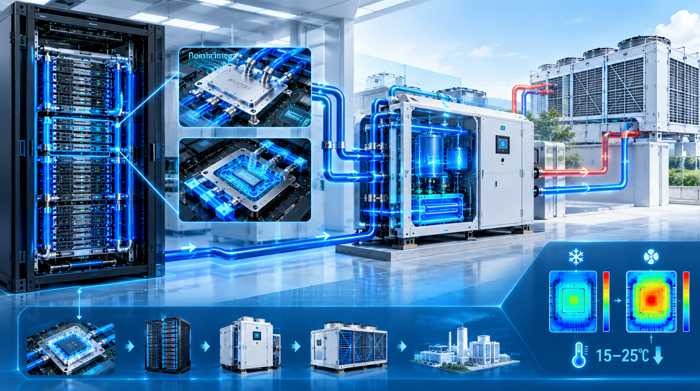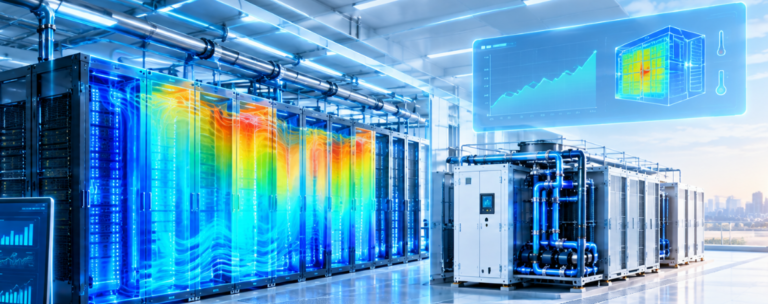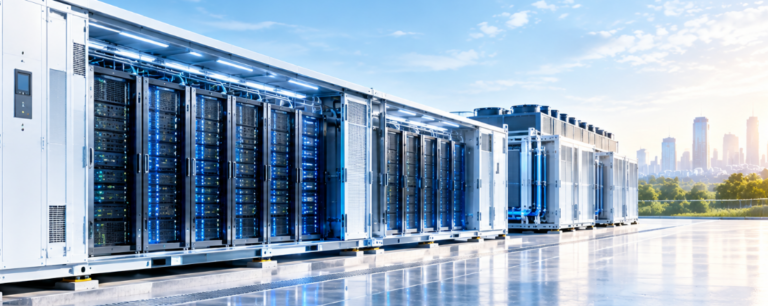



Ao entrar em um data center, você não vê racks de servidores espalhados aleatoriamente por uma sala — você vê fileiras cuidadosamente organizadas de equipamentos gerando enormes quantidades de calor. Se você gerencia uma sala de servidores, uma instalação de edge computing ou um data center de médio porte, o gerenciamento térmico é provavelmente uma de suas maiores preocupações. É aí que uma unidade CRAC—Computer Room Air Conditioning—entra em ação.
As unidades CRAC têm sido o cavalo de batalha do resfriamento de data centers por décadas e continuam sendo uma escolha prática e confiável para uma ampla gama de aplicações. Mas o que exatamente torna uma unidade CRAC diferente de outros sistemas de resfriamento? Quando você deve considerar usar uma? E como elas se comparam às alternativas modernas, como os sistemas CRAH?
Este guia aborda tudo o que você precisa saber sobre unidades CRAC, desde como funcionam até quando fazem mais sentido para sua instalação.
O Que é uma Unidade CRAC e Como Ela Funciona?
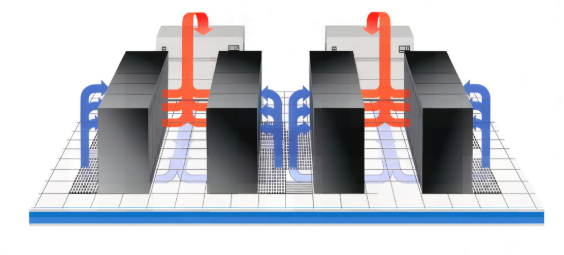
Uma unidade Computer Room Air Conditioning (CRAC) é um sistema de resfriamento de precisão projetado especificamente para data centers, salas de servidores e instalações de rede. Diferentemente dos condicionadores de ar comerciais padrão, as unidades CRAC fornecem controle mais rigoroso de temperatura e umidade, melhor filtração de ar e maior fluxo de ar — tudo essencial para proteger equipamentos de TI sensíveis.
Como uma unidade CRAC resfria seu data center:
Uma unidade CRAC opera usando um ciclo de refrigeração de expansão direta (DX), muito parecido com o ar-condicionado da sua casa — mas muito mais sofisticado. Veja o que acontece passo a passo:
- O ar quente da sua sala de servidores é aspirado para dentro da unidade CRAC através das entradas de ar de retorno.
- O ar passa sobre serpentinas evaporadoras preenchidas com refrigerante frio.
- O refrigerante dentro dessas serpentinas absorve o calor do ar ao passar.
- Um compressor impulsiona o ciclo de refrigeração, mantendo o refrigerante frio e circulando-o continuamente.
- O ar resfriado é soprado de volta para o data center através de ventiladores EC (eletronicamente comutados).
- O calor absorvido pelo refrigerante é rejeitado para o exterior através de um condensador — seja por ar, água ou uma mistura de glicol.
As unidades CRAC também incluem filtros de ar para capturar poeira e detritos, e umidificadores/desumidificadores para manter níveis adequados de umidade. Isso é crítico porque a baixa umidade pode causar descarga eletrostática (ESD) que danifica componentes eletrônicos, enquanto a alta umidade pode levar à condensação e corrosão.
Componentes principais de uma unidade CRAC:
| Componente | Função |
|---|---|
| Compressor | Impulsiona o ciclo de refrigeração; mantém o refrigerante frio |
| Serpentinas evaporadoras | O refrigerante flui através destas serpentinas para absorver o calor do ar |
| Ventiladores EC | Movimentam o ar frio eficientemente enquanto geram calor mínimo |
| Filtros de ar | Removem poeira e contaminantes do ar circulante |
| Refrigerante | Composto químico que transporta calor do interior para o exterior |
| Umidificador/Desumidificador | Mantém a umidade ideal (tipicamente em torno de 50% UR) |
Unidades CRAC mais antigas só podiam ligar e desligar em resposta a mudanças de temperatura. Unidades mais recentes, no entanto, usam ventiladores EC de velocidade variável e controles avançados para modular a produção de resfriamento com base na demanda em tempo real — melhorando significativamente a eficiência energética.
CRAC vs. CRAH: Qual é a Diferença?
Se você pesquisou sobre resfriamento de data centers, provavelmente já encontrou as terminologias CRAC e CRAH. Embora esses dois sistemas pareçam semelhantes externamente e sirvam ao mesmo propósito — manter seus equipamentos de TI resfriados — eles funcionam de maneiras fundamentalmente diferentes. Entender essa distinção é essencial para escolher a solução certa para sua instalação.
Método de Resfriamento: A Diferença Central
A principal diferença entre unidades CRAC e CRAH está em como elas geram resfriamento:
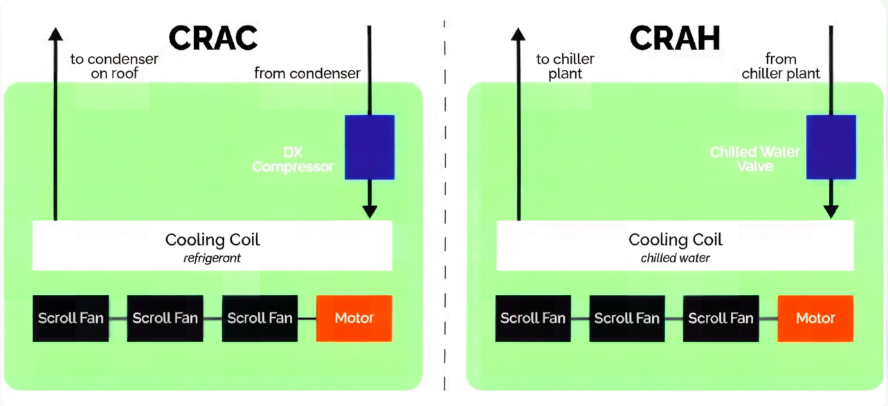
- CRAC (Computer Room Air Conditioner): Usa um ciclo de refrigeração de expansão direta (DX) com refrigerante e um compressor para resfriar o ar, semelhante a um condicionador de ar residencial.
- CRAH (Computer Room Air Handler): Usa água gelada fornecida por uma central de chiller. A própria unidade CRAH não tem compressor ou refrigerante; ela simplesmente sopra ar quente sobre serpentinas de resfriamento cheias de água.
Em outras palavras: uma unidade CRAC é um sistema de resfriamento autônomo que produz seu próprio ar frio, enquanto uma unidade CRAH é essencialmente uma grande caixa com ventilador e serpentina que recebe água fria de uma fonte externa.
Requisitos de Infraestrutura
As unidades CRAC são autônomas. Elas não requerem tubulação de água gelada, centrais de chiller ou qualquer outra infraestrutura externa de resfriamento. Você pode colocá-las ao redor do perímetro do seu data center, conectá-las a condensadores externos, e elas estão prontas para funcionar.
As unidades CRAH, por outro lado, dependem de uma central de água gelada — o que significa que você precisa de bombas, tubulações, válvulas e uma instalação de chiller dedicada. Isso é um grande investimento em infraestrutura.
Comparação de Eficiência Energética
Ao comparar a eficiência de CRAC vs. CRAH, os números contam uma história clara:
- Unidades CRAC têm eficiência moderada porque cada unidade opera seu próprio compressor, e os compressores consomem eletricidade substancial.
- Unidades CRAH são significativamente mais eficientes energeticamente em implantações de grande escala. Quando combinados com economizadores do lado da água ou loops de free cooling, os sistemas CRAH podem atingir pontuações PUE muito mais baixas.
No entanto, a eficiência não é o único fator. Para instalações de pequeno a médio porte, a diferença de eficiência pode não justificar o enorme custo inicial de construção de uma central de água gelada.
Tabela de Comparação CRAC vs. CRAH
| Característica | Unidade CRAC | Unidade CRAH |
|---|---|---|
| Método de resfriamento | Expansão direta (DX) à base de refrigerante | Água gelada de central |
| Possui compressor? | Sim | Não |
| Possui refrigerante? | Sim | Não |
| Infraestrutura necessária | Condensador externo | Central de água gelada, tubulações, bombas |
| Autônomo? | Sim | Não |
| Eficiência energética | Moderada | Muito alta (especialmente com economizadores) |
| Implantação típica | Data centers de pequeno a médio porte, sites de edge | Grandes empresas, instalações hyperscale |
| Custo de capital inicial | Mais baixo | Mais alto (devido à central) |
| Complexidade de manutenção | Moderada (compressor, manuseio de refrigerante) | Mais baixa (menos peças móveis por unidade) |
| Capacidade de fluxo de ar | Até ~100 kW por unidade | Até ~250 kW+ por unidade |
Qual Escolher?
- Escolha CRAC se você estiver operando um data center de pequeno a médio porte (carga de 200 kW ou menos), um site de edge computing ou uma instalação sem infraestrutura existente de água gelada. As unidades CRAC oferecem simplicidade, custos iniciais mais baixos e implantação direta.
- Escolha CRAH se você estiver operando um grande data center empresarial ou hyperscale onde a eficiência energética e a escalabilidade são prioridades máximas, e você já possui — ou pode justificar — o investimento em uma central de água gelada.
Quando uma Unidade CRAC é Ideal para Você?
As unidades CRAC não são uma solução única para todos os casos, mas se destacam em cenários específicos. Veja onde as unidades CRAC fazem mais sentido:
1. Data Centers de Pequeno a Médio Porte
Se sua carga de TI é de 200 kW ou menos, as unidades CRAC são frequentemente a escolha ideal. Elas fornecem resfriamento de precisão confiável sem a complexidade e o custo de capital da infraestrutura de água gelada. Muitos data centers de pequeno e médio porte na América do Norte, Europa e Ásia dependem de unidades CRAC como sua principal solução de resfriamento.
2. Sites de Edge Computing
Instalações de edge computing são tipicamente pequenas, distribuídas e localizadas em lugares onde construir uma central de água gelada seria impraticável ou financeiramente inviável. As unidades CRAC são fáceis de implantar nesses ambientes. Elas são frequentemente encontradas em pods de dados modulares, salas de telecomunicações e salas de servidores remotas.
3. Modernização de Instalações Legadas
Se seu data center existente foi construído em torno de unidades CRAC e resfriamento perimetral, a transição para um sistema baseado em CRAH provavelmente exigiria grandes mudanças estruturais — incluindo modificações no piso elevado, instalação de tubulação de água gelada e possivelmente uma nova central de chiller. Modernizar uma instalação legada com mais unidades CRAC é frequentemente o caminho mais simples.
4. Instalações sem Infraestrutura de Água Gelada
Nem todo edifício tem uma central de chiller. Na verdade, a maioria dos edifícios comerciais não tem. Para instalações de colocation, salas de servidores empresariais e centrais de telecomunicações construídas sem distribuição de água gelada, as unidades CRAC fornecem uma solução plug-and-play.
5. Pods de Colocation Hyperscale
Mesmo dentro de data centers hyperscale, as unidades CRAC às vezes encontram um papel — particularmente em pods de expansão modulares ou zonas isoladas onde a instalação de tubulações de água gelada seria ineficiente.
Qual é o Próximo Passo para o Resfriamento de Precisão?
A indústria de resfriamento de data centers está evoluindo rapidamente, impulsionada pelo aumento das densidades de rack, cargas de trabalho de IA e pressão para reduzir o consumo de energia. Então, o que o futuro reserva para a tecnologia CRAC?
Forte Crescimento de Mercado
Apesar do aumento do resfriamento líquido e dos sistemas híbridos, o mercado de CRAC continua a se expandir. O mercado global de CRAC foi avaliado em aproximadamente USD 5,03 bilhões em 2025 e deve atingir USD 14,51 bilhões até 2034, crescendo a uma taxa de crescimento anual composta (CAGR) de 12,6%. O mercado mais amplo de condicionamento de ar de precisão para data centers deve crescer a um CAGR de 11% até 2030.
Inovações em Eficiência Energética
Os fabricantes estão continuamente melhorando a eficiência das CRAC através de vários avanços tecnológicos:
- Ventiladores EC de velocidade variável que ajustam o fluxo de ar com base na demanda em tempo real
- Controles inteligentes com otimização de resfriamento orientada por IA
- Economizadores de free cooling que usam ar externo quando as temperaturas permitem
- Compressores de alta eficiência com desempenho melhorado em carga parcial
Integração com Resfriamento Líquido
Para cargas de trabalho de IA e HPC de alta densidade — onde as densidades de rack podem exceder 30 kW — o resfriamento a ar sozinho muitas vezes não é suficiente. O futuro é provavelmente híbrido: unidades CRAC ou CRAH cuidam do resfriamento ambiente da sala, enquanto o resfriamento líquido direto ao chip ou por imersão lida com os componentes mais quentes.
Sustentabilidade e Transição de Refrigerantes
Regulamentações ambientais estão eliminando gradualmente os refrigerantes de alto potencial de aquecimento global (GWP). Os fabricantes de CRAC estão respondendo desenvolvendo sistemas que usam refrigerantes de baixo GWP e refrigerantes naturais. Esta transição continuará moldando o mercado de CRAC na próxima década.
Uma Unidade CRAC é Adequada para o Seu Data Center?
As unidades CRAC continuam sendo uma escolha confiável e prática para data centers de pequeno a médio porte, sites de edge computing e instalações legadas. Elas oferecem custos iniciais mais baixos, instalação mais simples e confiabilidade comprovada — vantagens que importam quando você está operando com orçamento limitado ou em uma instalação sem infraestrutura de água gelada.
No entanto, se você está planejando um grande data center empresarial ou hyperscale com metas ambiciosas de PUE, as unidades CRAH com centrais de água gelada (e economizadores) são provavelmente o melhor investimento a longo prazo.