

A infraestrutura de data center é a combinação em camadas de fornecimento de energia, gerenciamento térmico e instalações de suporte que mantém o hardware de computação funcionando 24 horas por dia. O resfriamento tornou-se a restrição decisiva: o gerenciamento térmico pode consumir até 40% da energia total de uma instalação, e os racks de IA modernos podem ultrapassar 30 kW cada. Operadores que combinam resfriamento escalável com UPS, PDU e energia de reserva confiáveis alcançam PUE mais baixo e maior vida útil do hardware.
De acordo com a Pesquisa de Sistemas de Resfriamento 2024 do Uptime Institute, o resfriamento líquido direto já está em produção em mais de uma em cada cinco instalações, sinalizando uma mudança estrutural no projeto de infraestrutura de data center. A adoção está concentrada em cargas de trabalho de computação de alto desempenho, treinamento de IA e pesquisa, onde as densidades de racks superam o tratamento de ar tradicional. Este guia mapeia cada camada — energia, resfriamento e sistemas de suporte — e explica por que a dissipação de calor agora orienta a maioria das decisões de planejamento.
O que é a infraestrutura de data center e por que ela importa?
A infraestrutura de data center abrange todos os sistemas físicos que suportam equipamentos de computação, armazenamento e rede. Ela se divide em três pilares: fornecimento de energia, gerenciamento térmico e instalações auxiliares, como cabeamento, supressão de incêndio, monitoramento e segurança física. Cada pilar deve crescer em conjunto, porque um gargalo em qualquer camada individual limita toda a instalação. Ignorar uma camada enquanto se investe demais em outra gera desperdício e fragilidade operacional.
Os riscos são mensuráveis. O relatório Energy and AI da Agência Internacional de Energia estima que o consumo global de eletricidade dos data centers atingiu cerca de 415 TWh em 2024 e pode mais que dobrar, chegando a aproximadamente 945 TWh até 2030. Essa trajetória obriga as equipes de infraestrutura de data center a planejar a capacidade de energia e resfriamento com anos de antecedência, porque modernizar uma instalação em operação custa muito mais do que construir capacidade desde o início.
As decisões de infraestrutura também moldam o custo total de propriedade. Uma instalação bem projetada evita capacidade ociosa, em que energia ou resfriamento não utilizados são pagos, mas nunca consumidos. Por isso, os operadores dimensionam cada camada com base no crescimento realista das cargas de trabalho, e não em padrões do fornecedor ou picos de carga passados. Eles também padronizam hardware e conectores para preservar a flexibilidade de compra. Essa disciplina de planejamento separa instalações lucrativas de estouros crônicos de custo.
Quais sistemas de energia mantêm a infraestrutura de data center confiável?
A energia é a primeira camada da infraestrutura de data center e deve ser ao mesmo tempo redundante e limpa. Os sistemas de fonte de alimentação ininterrupta (UPS) preenchem as falhas da rede elétrica com energia de bateria, enquanto as unidades de distribuição de energia (PDUs) encaminham eletricidade com segurança para racks e gabinetes. Os projetos modernos de UPS online atingem aproximadamente 96% de eficiência, e as baterias de íons de lítio agora substituem as unidades de chumbo-ácido reguladas por válvula, mais pesadas, em muitas implementações.
Os projetistas adicionam geradores de reserva, chaves de transferência automáticas e barramentos blindados para construir redundância N ou N+1. A pesquisa do Lawrence Berkeley National Laboratory identifica as conversões eficientes de UPS e PDU entre as oportunidades mais claras de economia de energia. Uma arquitetura de energia resiliente na infraestrutura de data center também suprime harmônicos e quedas de tensão que podem corromper cargas de TI sensíveis, além de isolar falhas para que um componente com defeito nunca se propague pelo salão.
O monitoramento por rack completa o quadro de energia. As PDUs inteligentes reportam tensão, corrente e fator de potência em tempo real, permitindo que os operadores equilibrem a carga entre os circuitos e evitem disjuntores desarmados. Sem essa visibilidade, a sobrecarga de um único alimentador pode derrubar uma fileira inteira, independentemente da capacidade de resfriamento disponível nas proximidades. A telemetria granular também alimenta modelos de planejamento de capacidade e dá suporte à cobrança precisa para locatários de colocation.
Por que o resfriamento é a camada mais crítica da infraestrutura de data center?
O gerenciamento térmico é a camada mais crítica da infraestrutura de data center porque a densidade de calor superou os projetos baseados em ar. A densidade média de energia por rack praticamente dobrou em dois anos, subindo de cerca de 8 kW para 17 kW, enquanto um único rack de GPU pode ultrapassar 30 kW. O resfriamento já consome até 40% da energia total de uma instalação, tornando a eficiência térmica um fator direto das despesas operacionais.
O calor encurta a vida útil dos componentes e desencadeia a limitação térmica que reduz o desempenho de IA. Manter o ar de entrada dos servidores dentro das Diretrizes Térmicas da ASHRAE, normalmente de 18–27 °C para as classes recomendadas, protege o hardware e reduz a carga de resfriamento mecânico. Sistemas de resfriamento de precisão, como as unidades CRAC e CRAH, proporcionam esse controle dentro da infraestrutura de data center moderna, e o gerenciamento de umidade evita condensação e descargas eletrostáticas.
Essa mudança não é opcional para frotas com uso intensivo de IA. Racks dominados por aceleradores dissipam muito mais calor por metro quadrado do que servidores tradicionais, de modo que a capacidade térmica muitas vezes se torna o primeiro limite para o crescimento da densidade. Instalações que não conseguem remover esse calor precisam subutilizar o hardware ou enfrentar falhas de confiabilidade. O resfriamento agora ancora a estratégia de infraestrutura justamente porque decide quanta capacidade de computação um edifício pode abrigar.
Ar-condicionado de precisão ou resfriamento líquido: qual abordagem se adapta à infraestrutura de data center moderna?
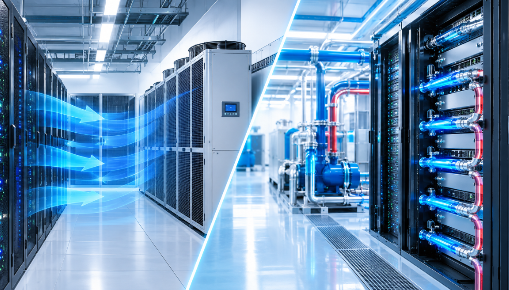
O ar-condicionado de precisão continua sendo o cavalo de batalha da infraestrutura de data center moderna. Os condicionadores de ar de sala de computadores (CRAC) e os manipuladores de ar (CRAH) resfriam salões inteiros, e o confinamento de corredor quente ou frio aumenta a eficiência. O resfriamento a ar é maduro, econômico e simples de manter, mas perde eficácia acima de aproximadamente 20–25 kW por rack, onde começam a aparecer curto-circuitos de fluxo de ar e pontos quentes.
| Critério | Resfriamento a ar de precisão | Resfriamento líquido |
|---|
| Suporte a densidade de rack | Até ~20–25 kW | 30 kW e além |
| PUE típico da instalação | 1.3–1.6 | 1.1–1.3 |
| Maturidade de implantação | Muito alta | Crescendo rapidamente |
| Principais riscos | Gargalo de densidade | Vazamento e manutenção |
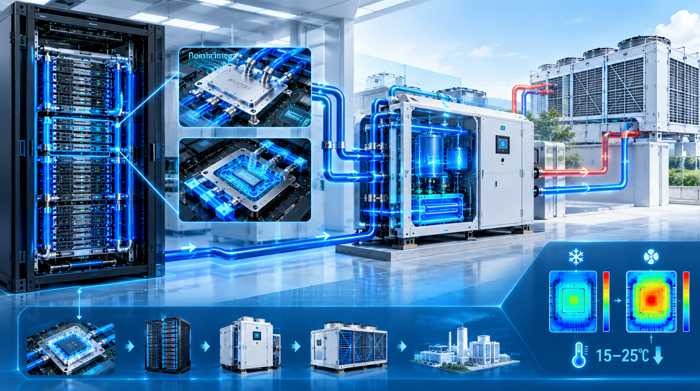
O resfriamento líquido remove o calor diretamente dos chips ou de servidores inteiros. Os sistemas de cold plate canalizam o fluido refrigerante através de placas metálicas acopladas aos processadores, enquanto o resfriamento por imersão submerge os servidores em fluido dielétrico. Ambas as abordagens suportam racks de 30 kW e além, com PUE muito mais baixo do que o tratamento de ar convencional na infraestrutura de data center, e ao mesmo tempo reduzem o ruído dos ventiladores e as perdas por recirculação.
A pesquisa de 2024 do Uptime Institute mostra que o resfriamento líquido direto está implantado em mais de um em cada cinco sites de operadores, embora menos de 10% dos racks de TI empresariais o utilizem atualmente. Os sistemas de cold plate com água lideram a adoção porque se integram facilmente à infraestrutura existente da instalação e preservam as garantias do hardware. Os projetos híbridos combinam camadas de ar e líquido para se adequar à maioria das atualizações de infraestrutura de data center e permitem uma migração gradual, sem redesenho completo.
Que outros componentes fundamentais completam a infraestrutura de data center?
Além de energia e resfriamento, vários sistemas completam a infraestrutura de data center. O cabeamento estruturado e a fibra óptica conectam os servidores à rede, enquanto os sistemas de rack e confinamento organizam os equipamentos. A supressão de incêndio, a detecção de vazamentos e o monitoramento ambiental protegem os ativos, e a segurança física limita o acesso às zonas críticas. Os sistemas de gerenciamento de edifícios centralizam o controle em todas as camadas, dando aos operadores um único painel para cada subsistema.
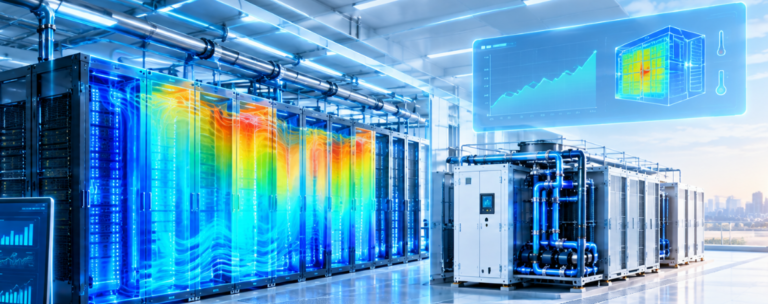
O monitoramento é o sistema nervoso da infraestrutura de data center moderna. Painéis em tempo real acompanham temperatura, umidade, consumo de energia e fluxo de água, permitindo manutenção preditiva e análise de causa raiz mais rápida. O software de análise sinaliza anomalias antes que se tornem indisponibilidades, transformando dados brutos de sensores em decisões acionáveis para as equipes de operações. Os limites de alerta devem ser ajustados para evitar ruído que treine a equipe a ignorar os alarmes.
Rede e redundância completam a pilha. Switches com conexão dupla, caminhos de fibra diversificados e loops de resfriamento redundantes garantem que nenhuma falha de componente isolada pare a instalação. A documentação e o planejamento de capacidade unem esses elementos, de modo que a expansão segue um caminho claro e auditável, em vez de improvisação reativa. Exercícios regulares de recuperação de desastres validam que os sistemas de reserva realmente funcionam sob carga.
Como modernizar a infraestrutura de data center para cargas de trabalho de IA?
A modernização da infraestrutura de data center começa medindo a densidade real dos racks em vez de suposições legadas, para que você possa dimensionar o resfriamento com precisão. Para clusters de IA de alta densidade, implante primeiro o resfriamento líquido por cold plate e mantenha o ar-condicionado de precisão para racks de uso geral. Adapte o confinamento e aumente as temperaturas de fornecimento dentro dos limites da ASHRAE para reduzir o consumo de energia imediatamente, monitorando as temperaturas de entrada para confirmar margens operacionais seguras.
Em seguida, dimensione corretamente o caminho de energia da infraestrutura de data center. Substitua módulos de UPS superdimensionados, atualize as PDUs para monitorar a carga por rack e verifique a capacidade de reserva em relação à demanda de pico das GPUs. Padronize conectores neutros em relação ao fornecedor e a química do refrigerante para preservar a flexibilidade de aquisição. Divida as atualizações em fases para que energia, resfriamento e rede cresçam juntos, evitando capacidade ociosa e pontos únicos de falha em todo o edifício.
Faça um piloto antes de escalar. Implante o resfriamento líquido em uma fileira de alta densidade, meça o PUE e a confiabilidade por um trimestre e depois expanda com base em evidências. Acompanhe o tempo médio entre falhas e a pressão do lado da água como indicadores de saúde em longo prazo. Essa abordagem em etapas contém o risco enquanto constrói experiência interna para implantações maiores, e produz os dados necessários para justificar novos investimentos de capital.
Qual é o futuro do gerenciamento térmico da infraestrutura de data center?
O futuro do gerenciamento térmico da infraestrutura de data center aponta para projetos que priorizam o líquido. A demanda de eletricidade dos aceleradores cresce cerca de 30% ao ano, empurrando os racks muito além dos limites do resfriamento a ar. Os sistemas de cold plate dominarão o curto prazo, com o resfriamento por imersão em seguida em nichos de densidade extrema e implantações de edge computing. Conectores padronizados e especificações de refrigerante reduzirão o custo de integração.
A reutilização do calor residual transformará o resfriamento de um custo em um recurso. O calor recuperado pode aquecer edifícios próximos ou acionar chillers de absorção, melhorando a eficiência geral e apoiando as metas de descarbonização. Os reguladores estão começando a exigir planejamento de recuperação de calor para novas instalações, especialmente em mercados urbanos densos. A convergência dos padrões de conectores e refrigerantes de grupos do setor reduzirá as barreiras de adoção e acelerará a implantação.
Uma infraestrutura de data center confiável equilibra energia redundante, resfriamento escalável e sistemas de suporte. Diante do aumento da densidade de calor, a estratégia térmica agora determina a disponibilidade (uptime), o custo e o desempenho da IA. Priorize o resfriamento líquido para cargas de alta densidade, mantenha o ar-condicionado de precisão para racks padrão e monitore todas as camadas continuamente. As instalações que modernizam o resfriamento hoje suportarão as cargas de trabalho de amanhã sem reconstruções dispendiosas, transformando a infraestrutura de uma limitação em uma vantagem competitiva.