

Precision AC (also known as Computer Room Air Conditioning or CRAC units) stands as the backbone of reliable IT infrastructure, providing unmatched control over temperature and humidity compared to conventional HVAC systems.
Precision AC represents a specialized category of cooling systems designed explicitly for environments where temperature and humidity stability are non-negotiable. Unlike residential or commercial HVAC systems optimized for human comfort, precision air conditioners are engineered to maintain:
- Temperature control: ±1°F (0.56°C) or better, typically targeting 64-77°F (18-25°C)
- Humidity control: ±3-5% relative humidity (RH), usually maintaining 40-60% RH
- 24/7/365 continuous operation: No downtime for maintenance or seasonal adjustments
- High sensible heat ratio (SHR): Focused on removing heat without unnecessary dehumidification
Key Differences Between Precision AC and Standard Air Conditioning
| Feature | Precision AC | Standard HVAC |
| Control Precision | ±0.56°C temperature, ±3-5% RH | ±2-3°C temperature, ±10% RH |
| Operation Cycle | 24/7/365, no seasonal shutdown | Intermittent, adjusted for occupancy |
| Sensible Heat Ratio | 0.9-0.95 (focus on heat removal) | 0.6-0.7 (balances temperature/humidity for comfort) |
| Airflow Design | High airflow, low velocity to prevent hotspots | Lower airflow, higher velocity for human comfort |
| Redundancy Options | N+1, 2N configurations standard | Basic redundancy, if any |
| Monitoring Capabilities | SNMP, BACnet, DCIM integration | Limited, basic thermostat controls |
| Load Handling | Sustained heat loads from IT equipment | Variable loads with occupancy patterns |
Precision AC systems excel in environments with constant, high heat densities, such as data centers, server rooms, network operations centers (NOCs), and laboratories housing sensitive equipment.
How Precision AC Works?
A precision air conditioning unit operates on similar refrigeration principles to standard AC systems but with specialized components and control mechanisms tailored for critical environments:
Core Components of Precision AC Systems
- Microprocessor Controller: The “brain” of the system, continuously monitoring and adjusting conditions with millisecond responsiveness
- Dual Cooling Circuits: Many units feature redundant refrigeration circuits for enhanced reliability
- Humidification/Dehumidification Modules: Precise control of moisture levels to prevent static electricity and condensation
- High-Efficiency Fans: Deliver consistent airflow while minimizing energy consumption
- Air Filtration Systems: HEPA or ULPA filters to maintain air quality and prevent dust buildup on sensitive electronics
- Heat Exchangers: Optimized for maximum heat transfer efficiency
- Leak Detection Systems: Critical for water-cooled units to prevent damage to IT equipment
Operational Cycle: From Heat Removal to Climate Stability
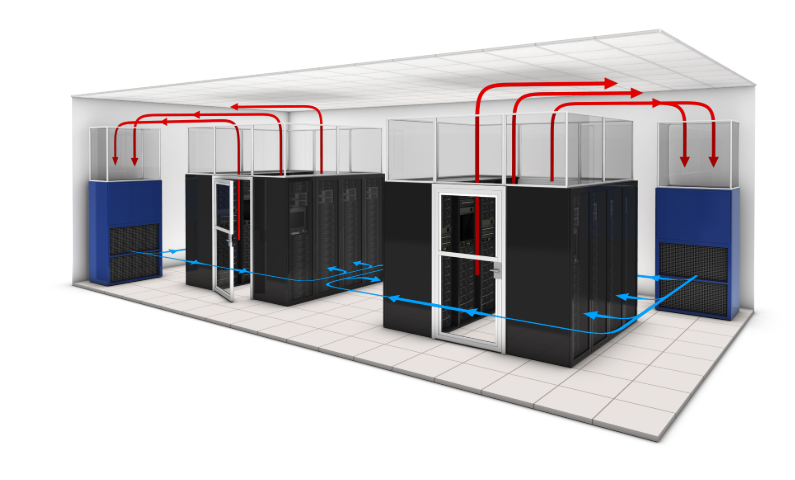
- Air Intake: Warm air from the data center is drawn into the unit through return vents
- Filtering: Air passes through high-efficiency filters to remove particulate matter
- Temperature Adjustment: Refrigerant flows through evaporator coils, cooling the air while removing moisture
- Humidity Control: If RH is too low, humidifiers add moisture; if too high, dehumidification processes activate
- Air Distribution: Cooled, conditioned air is pushed back into the data center through supply vents
- Monitoring & Adjustment: Sensors continuously feed data to the controller, which modulates fan speed, refrigerant flow, and humidity controls in real-time
Room Cooling vs. Rack Cooling vs. In Row Cooling
Precision AC systems integrate with three primary cooling architectures, each with distinct advantages depending on data center size, density, and budgetENERGY STAR:
1. Room Cooling
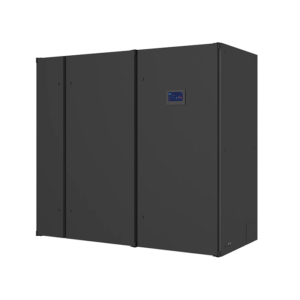
Room cooling represents the traditional approach, with CRAC units installed along the perimeter walls of the data center. This architecture relies on raised floors for cold air distribution and overhead return for hot air.
Advantages:
- Lower upfront costs and simpler installation
- Easier maintenance access to cooling equipment
- Suitable for low-to-medium density environments (≤5 kW/rack)
Disadvantages:
- Higher energy consumption due to longer airflow paths and potential cold/hot air mixing
- Difficulty eliminating hotspots in high-density configurations
- Reduced efficiency as rack density increasesENERGY STAR
2. In Row Cooling
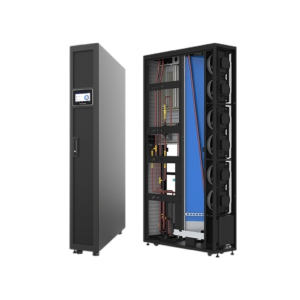
In row cooling positions cooling units directly between server racks, creating dedicated cold and hot aisles through physical containment. This approach minimizes airflow distance and prevents cold/hot air recirculation.
Advantages:
- 30-50% lower fan energy consumption compared to room cooling
- Better temperature uniformity with reduced hotspots
- Scales effectively for medium-to-high density (5-20 kW/rack)
- Shorter airflow paths improve overall system efficiency
Disadvantages:
- Higher initial investment due to additional containment infrastructure
- Requires careful planning for row layout and power distribution
- Reduced flexibility for future layout changes
3. Rack Cooling
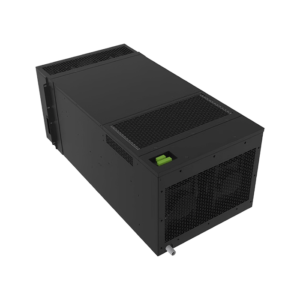
Rack cooling brings precision AC directly into the server enclosure, placing cooling components as close as possible to heat sources. This architecture offers the highest level of cooling precision and density support.
Advantages:
- Enables ultra-high density deployments (up to 50+ kW/rack)
- Eliminates airflow waste and maximizes cooling capacity utilization
- Immune to room layout constraints and installation variations
- Ideal for AI, HPC, and other high-heat workloads
Disadvantages:
- Highest upfront costs and most complex installation
- Requires specialized rack infrastructure and power distribution
- Maintenance access can be challenging in fully populated racks
Comparative Analysis: Which Architecture is Right for You?
| Factor | Room Cooling | In Row Cooling | Rack Cooling |
| Typical Density | ≤5 kW/rack | 5-20 kW/rack | 20-50+ kW/rack |
| Energy Efficiency | Lowest | Medium | Highest |
| Upfront Cost | Lowest | Medium | Highest |
| Hotspot Prevention | Poor | Good | Excellent |
| Scalability | Limited | Moderate | High |
| Flexibility | High | Moderate | Low |
| Best For | Small data centers, low density | Mid-sized facilities, growing density | Large hyperscale, AI/HPC workloads |
Key Benefits of Precision AC
1. Enhanced Equipment Reliability
Temperature fluctuations and humidity imbalances are leading causes of IT equipment failure. Precision AC eliminates these risks by maintaining consistent conditions, extending hardware lifespan by 30-50% in many cases.
2. Improved Energy Efficiency
While precision AC systems have higher upfront costs, their specialized design delivers significant long-term savings:
- Free cooling capabilities: Many units switch to energy-efficient free cooling when outdoor temperatures allow
- High SHR ratio: Minimizes energy wasted on unnecessary dehumidification
- Variable speed components: Fans and compressors adjust to actual load requirements, reducing energy consumption during low-demand periods
3. Reduced Total Cost of Ownership (TCO)
The combination of extended hardware lifespan, lower energy costs, and fewer outages results in substantial TCO reductions over 5-10 years. Data centers using precision AC report 20-40% lower annual cooling costs compared to conventional HVAC systemsENERGY STAR.
4. Simplified Compliance & Reporting
Precision AC systems integrate seamlessly with Data Center Infrastructure Management (DCIM) software, providing detailed metrics for compliance with industry standards (ASHRAE, ISO) and sustainability reporting requirements.