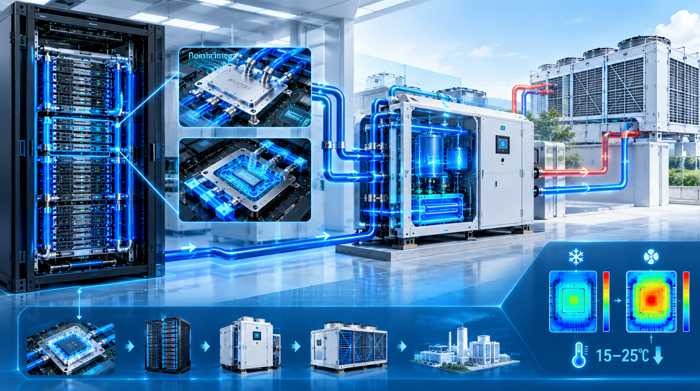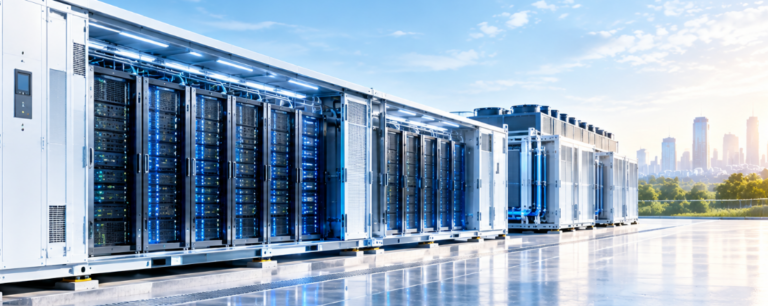



HPC liquid cooling is not a single monolithic technology. It is a family of thermal management approaches that use a liquid medium — typically a water-glycol mix or dielectric fluid — to remove heat from high-performance computing components far more efficiently than air.
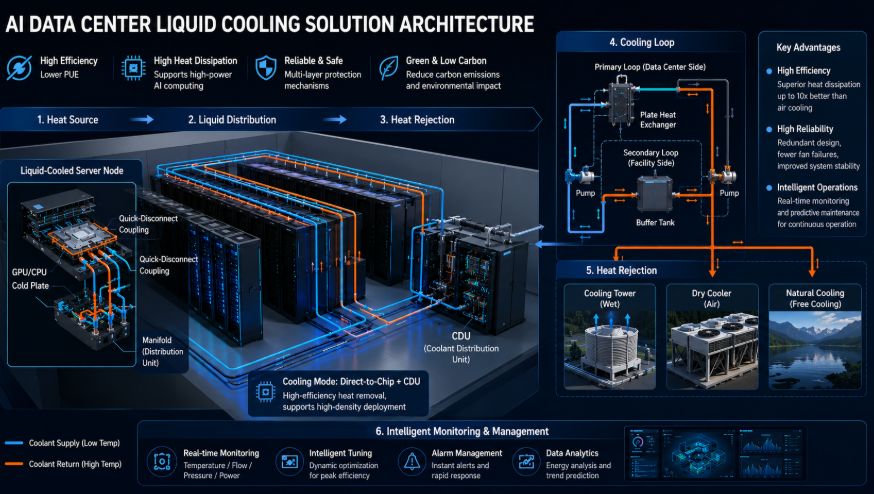
When you look at the numbers, the physics makes the case for itself: water has roughly 3,500 times the volumetric heat capacity of air, according to fundamental thermal engineering principles. Your next-gen GPUs are generating heat that air alone simply cannot remove fast enough. This is why HPC liquid cooling is rapidly moving from niche to necessity.
According to TrendForce, global liquid cooling penetration in data centers is forecast to jump from 14% in 2024 to 33% in 2025. You are not betting on an experimental technology; you are aligning with a market that is doubling its liquid cooling footprint in a single year.
The data center liquid cooling market itself grew from $4.75 billion in 2024 to $5.47 billion in 2025 and is projected to reach $11.18 billion by 2030 at a CAGR of 15.31%, according to ResearchAndMarkets. For your planning purposes, what matters is that the equipment supply chain for HPC liquid cooling is scaling fast, and early adopters are locking in the best deployment timelines.
Your Rack Density Tipping Point
You need a clear threshold for action. Peter Huang, Global President of Castrol’s thermal management business, offers a practical benchmark quoted by China Daily: when your rack power reaches 70 to 80 kW, hybrid cooling remains possible, but beyond 100 kW, air cooling is ineffective and HPC liquid cooling becomes your only viable path. If you examine your GPU roadmap, this threshold is approaching fast.
NVIDIA’s Blackwell B200 GPU carries a thermal design power of 1,200W per chip, while the Blackwell Ultra B300 pushes that to 1,400W. When you rack these GPUs in a GB200 NVL72 configuration, your per-rack power demand hits 120 kW. Your existing air-cooled facility was never designed for this.
The industry consensus captured by multiple data center engineering firms is clear: if your rack power exceeds 30 kW, you should begin planning your HPC liquid cooling architecture immediately rather than waiting for thermal throttling to force your hand.
Direct-to-Chip Cooling: Your Fastest Path
Direct-to-chip (DTC) cooling is your most pragmatic entry point into HPC liquid cooling. This approach places cold plates directly on your CPUs and GPUs, circulating coolant through microchannels to absorb heat at the source. Your remaining server components continue to use airflow, which means you do not need to redesign your entire facility on day one.
According to GBC Engineers, DTC is usually well suited for racks in the 30 to 100 kW range — exactly the window most operators find themselves entering right now.
For you as an operator, the energy numbers are compelling. DTC systems typically achieve a PUE between 1.03 and 1.15, based on engineering benchmarks from GBC Engineers. You can deploy DTC in phased upgrades, adding liquid-cooled racks as your high-density workloads grow.
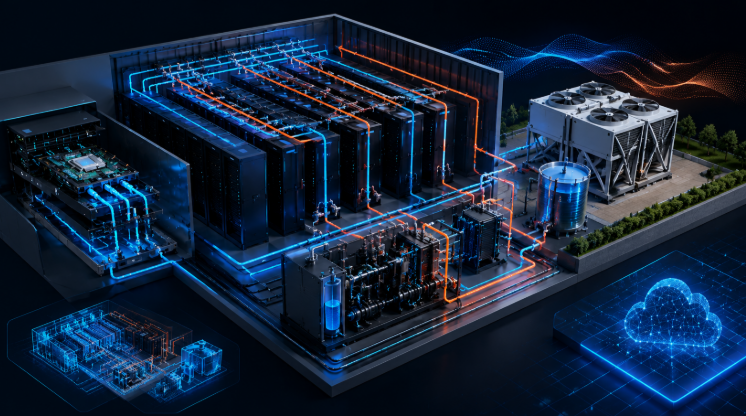
Quick-disconnect fittings let your maintenance teams handle servers with familiar rack-based workflows, keeping your retraining costs manageable. The CDU — coolant distribution unit — isolates your server loop from your building water loop, protecting your IT hardware from pressure fluctuations and maintenance events.
What you need to watch for: leak detection, connection quality, and coolant chemistry monitoring become part of your daily operations. But for most existing data centers, DTC offers you the strongest balance of performance gain and operational continuity among all HPC liquid cooling options available today.
Immersion Cooling: When Your Density Demands More
If your roadmap includes sustained rack densities above 100 kW, immersion cooling deserves your attention as the next tier of HPC liquid cooling. Here your server boards are submerged in dielectric fluid that absorbs heat from processors, memory, and power electronics simultaneously. Single-phase immersion keeps the fluid liquid throughout operation, while two-phase immersion exploits a boiling process for even higher heat transfer rates.
Your PUE can drop as low as 1.02 to 1.05 with immersion, per GBC Engineers’ benchmarks. But you need to weigh this against a heavier operational lift: immersion tanks require new floor loading calculations, fluid monitoring and top-up procedures, material compatibility verification, and revised warranty conditions from your server OEMs. This route is strongest for your greenfield AI campuses or containerized HPC deployments where you can plan the building and operating model around the technology from day one.
If you are running a brownfield retrofit, immersion adds complexity that may not justify the incremental PUE gain over a well-engineered DTC system.
The Real Cost of Delaying Your HPC Liquid Cooling Transition
You might be tempted to squeeze another year out of your air-cooled infrastructure. But when you factor in thermal throttling, the economics turn against delay. GPUs that throttle to protect themselves lose 15% to 30% of their compute throughput, depending on workload intensity and ambient conditions.
If you are running a cluster of 100 GPUs each costing $30,000, that performance loss translates into millions of dollars in stranded compute capacity you have already paid for.
Your energy costs tell a parallel story. China’s national average data center PUE stood at 1.46 in 2024, according to the China Academy of Information and Communications Technology. If you can drive your PUE from 1.46 to 1.10 with HPC liquid cooling, the electricity savings on a mid-sized facility can reach hundreds of thousands of dollars annually. And this is before you account for the densification benefit: you can pack more compute into fewer square meters, deferring or eliminating your next building expansion entirely.
From Planning to Production: Your HPC Liquid Cooling Roadmap
1.Realistic load audit.
Map your current rack power distribution and overlay your GPU procurement plan for the next 18 to 24 months. If your peak rack density will cross 30 kW within that window, your cooling transition planning needs to start now — not when the hardware arrives.
2.A pilot deployment
Run a small cluster — four to eight liquid-cooled racks — and measure real-world PUE, coolant temperatures, and maintenance procedures against your baseline air-cooled environment. Many operators find that the hands-on learning from a pilot surfaces integration issues that no vendor white paper will tell you about: pipe routing conflicts, CDU placement constraints, or the training gaps in your facilities team. These early lessons are what let you scale HPC liquid cooling across your full estate without repeating expensive mistakes.
3.vendor selection
When you evaluate equipment partners, demand quantified data: supported rack power density, rated PUE improvement, maintenance intervals, spare parts availability, and leak containment mechanisms. If you are struggling to compare competing claims or need cold plates, CDUs, and rack manifolds that integrate cleanly with your existing infrastructure, equipment vendors like SOETECK can help you align component specifications with your actual thermal load profile and facility constraints. The right hardware decisions at this stage determine whether your HPC liquid cooling deployment stays on schedule and within budget.
Your Next Steps Before HPC Liquid Cooling Becomes a Bottleneck
You are operating in a window where early adopters are securing their supply chains and building the operational muscle that late movers will scramble to replicate. IDC projects that China’s liquid cooling server market will grow at a compound annual rate of 46.8% from 2024 to 2029, reaching $16.2 billion. That growth trajectory means equipment lead times, skilled technician availability, and vendor attention will increasingly tilt toward committed buyers.
Your immediate action items are simple: audit your rack density, run the PUE math on your current facility, and start a pilot. HPC liquid cooling is not a future consideration — it is the infrastructure decision that determines whether your next GPU investment delivers the performance you paid for or throttles back into mediocrity.