

As the world races toward net-zero carbon goals, data centers—critical hubs of the digital age—face a unique challenge: balancing 24/7 operational reliability with aggressive carbon reduction targets. Unlike residential or commercial cooling, data center cooling demands precision, consistency, and uninterrupted performance to protect sensitive IT equipment.
According to the International Energy Agency (IEA), cooling systems account for 7% to 30% of total data center electricity consumption, with less efficient enterprise facilities seeing that share climb even higher. Among the array of net-zero carbon cooling technologies available, high-efficiency precision air conditioners stand out as the most accessible, cost-effective, and impactful solution to cut emissions while safeguarding IT infrastructure.
The Unique Cooling Challenge of Data Centers
Data centers are not like typical buildings—their cooling needs are non-negotiable and highly specialized. IT equipment generates constant, high-density heat, requiring precise temperature and humidity control to prevent hardware failure, data loss, or performance throttling. Unlike residential air conditioners that cycle on and off based on comfort, data center cooling systems must run 24/7, 365 days a year, making efficiency a critical factor in both operational costs and carbon footprints.
Compounding this challenge is the rapid growth of data center demand. Global data center electricity consumption reached 240 to 340 terawatt-hours (TWh) annually in 2022, accounting for roughly 1% to 1.3% of total global electricity demand. Without efficient cooling solutions, this demand will only rise—threatening net-zero goals.
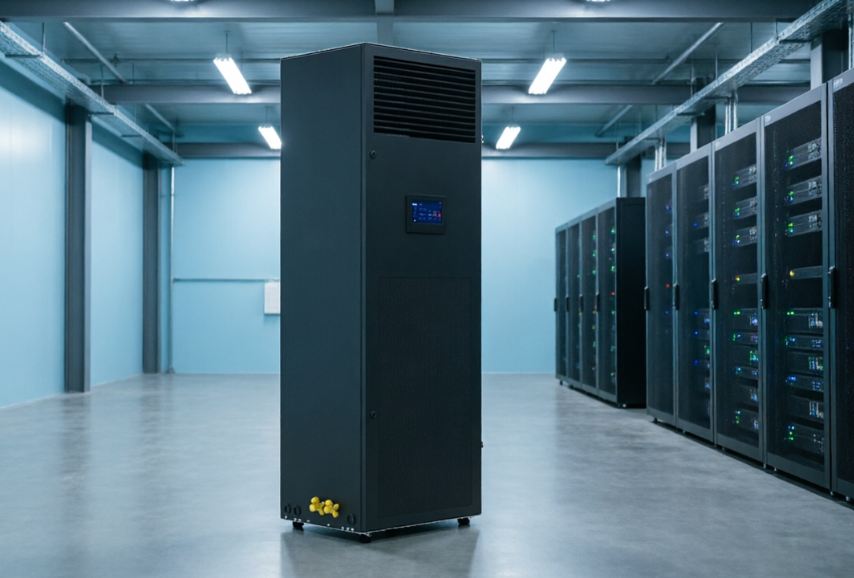
This is where high-efficiency precision air conditioners tailored for data centers become indispensable: they deliver the precision cooling required while slashing energy use and carbon emissions.
High-Efficiency Air Conditioners: Designed for Data Center Precision
Data center-grade high-efficiency precision air conditioners (often referred to as precision air conditioners) differ drastically from consumer or standard commercial AC units. They are engineered to address the unique demands of IT environments, with key features that drive efficiency, reliability, and sustainability. Below are the core innovations that make these systems critical to net-zero carbon cooling:
1. Inverter and Variable-Speed Compressors: Matching Load to Demand
Traditional data center cooling systems use fixed-speed compressors that run at full capacity regardless of the actual heat load, wasting significant energy during periods of lower IT activity. High-efficiency Precision air conditioners integrate inverter-driven variable-speed compressors that adjust their output in real time to match the data center’s heat load. This not only reduces energy consumption by 20% to 35% compared to conventional fixed-speed units but also maintains more consistent temperature and humidity levels—critical for IT equipment longevity.
For example, precision air conditioners with variable-speed compressors can operate at 20% to 100% capacity, eliminating the energy waste associated with frequent on/off cycling. The IEA notes that such “digital optimisation” of cooling systems—including variable-speed controls—can deliver 5% to 40% energy savings in commercial facilities, with data center applications seeing similar or greater gains when tailored to IT load variability.
2. EC Fans: Energy Efficiency at the Airflow Level
Airflow is a cornerstone of data center cooling, and high-efficiency precision air conditioners leverage Electronically Commutated (EC) fans instead of traditional AC fans. EC fans are up to 65% more energy-efficient than standard fans, with precise speed control that aligns airflow with cooling demand. A case study by Aermec found that replacing constant-velocity fans with EC fans in a data center precision air conditioner reduced annual fan energy consumption by 65.6%, cutting CO₂ emissions by 23.6 tonnes annually and lowering operational costs significantly.
EC fans also generate less heat and noise, reducing the overall cooling load and improving the working environment for data center staff—an added benefit that aligns with operational efficiency goals.
3. Low-GWP Refrigerants: Cutting Direct Emissions
High-efficiency precision air conditioners for data centers prioritize refrigerants with low Global Warming Potential (GWP), addressing both direct and indirect carbon emissions. Traditional precision AC units often use refrigerants like R-410A (GWP of 2,088), while modern high-efficiency models adopt alternatives such as R-32 (GWP 675) and R-454B (GWP 467). These low-GWP refrigerants not only reduce the environmental impact of potential leaks but also often improve heat transfer efficiency, further lowering energy use.
The Kigali Amendment to the Montreal Protocol, which aims to phase down hydrofluorocarbons (HFCs), has accelerated the adoption of these refrigerants in data centers. Full implementation of the amendment, combined with efficiency improvements from high-efficiency precision air conditioners, could result in global electricity savings of 74 petawatt-hours and CO₂ reductions of 49 billion metric tons between 2020 and 2050—benefits that directly impact data center sustainability targets.
4. Smart Integration and AI Optimization
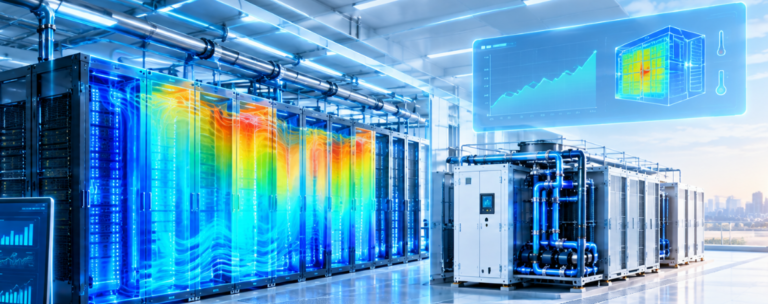
Today’s high-efficiency precision air conditioners are fully integrated with Data Center Infrastructure Management (DCIM) systems and building management systems (BMS), enabling real-time monitoring, automation, and AI-driven optimization. These smart features allow data center operators to track cooling performance, adjust settings remotely, and identify inefficiencies before they impact energy use or equipment reliability.
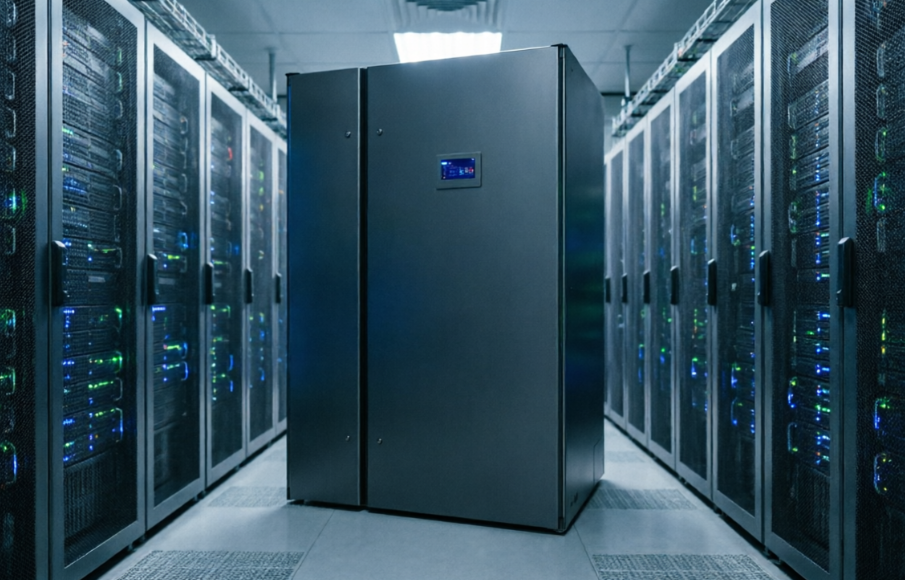
AI algorithms can analyze IT load patterns, outdoor weather conditions, and cooling system performance to automatically adjust fan speeds, compressor output, and airflow—optimizing efficiency without sacrificing precision. The IEA highlights this “digital optimisation” as a key lever for improving data center cooling efficiency, noting that it can unlock significant savings without costly hardware overhauls.
How to Select and Deploy High-Efficiency Precision ACs
Choosing the right high-efficiency air conditioner for your data center requires a focus on both efficiency and compatibility with your IT infrastructure. Here are practical tips to maximize sustainability and ROI:
1. Prioritize Efficiency Ratings Tailored to Data Centers
For data center precision air conditioners, focus on EER (Energy Efficiency Ratio) and COP (Coefficient of Performance) ratings—key metrics for continuous operation. The U.S. Code of Federal Regulations sets minimum EER standards for commercial cooling equipment, with high-efficiency models for data centers typically exceeding these requirements by 20% to 30%. Look for units with EER ratings of 3.5 or higher for air-cooled systems and COP ratings of 3.0 or higher for water-cooled systems, as recommended for data center applications.
2. Match Capacity to IT Load (Avoid Over-Sizing)
Over-sizing precision air conditioners leads to inefficient cycling and wasted energy, even with high-efficiency components. Conduct a detailed IT load calculation (including current and future hardware needs) to select units that match your actual cooling demand. Variable-speed compressors and EC fans help mitigate the impact of load fluctuations, but proper sizing remains critical for optimal efficiency.
3. Integrate with DCIM and BMS Systems
To fully leverage the efficiency of high-efficiency precision air conditioners, integrate them with your data center’s DCIM and BMS systems. This allows for centralized monitoring, AI-driven optimization, and proactive maintenance—all of which reduce energy waste and extend equipment lifespan. The IEA notes that such integration can deliver additional energy savings of 5% to 40%, depending on the complexity of the system and site design.
4. Combine with Passive Cooling Strategies
For maximum carbon reduction, pair high-efficiency precision air conditioners with passive cooling strategies like air-side economizers (free cooling) or indirect evaporative cooling. In climate-appropriate regions, free cooling can reduce compressor runtime by 70% or more, further cutting energy use and emissions. For example, a northern data center using free cooling alongside high-efficiency precision air conditioners reduced cooling by 40% compared to traditional systems.
The Future of Net-Zero Data Center Cooling
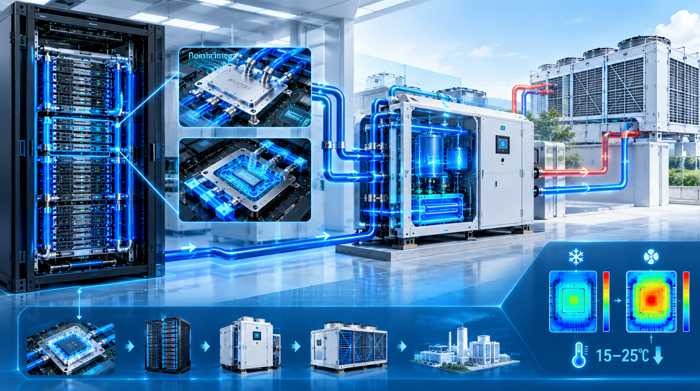
While emerging technologies like liquid cooling (for high-density AI data centers) and district cooling are gaining traction, high-efficiency precision air conditioners remain the cornerstone of net-zero carbon cooling for most data centers. They offer a balance of accessibility, reliability, and cost-effectiveness that is hard to match—especially for existing facilities undergoing retrofits.
The IEA’s 2025 Energy Efficiency Report highlights that efficiency progress in data center cooling is currently below COP28 ambitions, with global efficiency improvements averaging just 1.3% per year—well short of the 4% annual target needed to meet net-zero goals by 2030. High-efficiency precision air conditioners provide a straightforward way to close this gap, delivering immediate energy savings and carbon reductions without disrupting IT operations.
As data centers continue to grow in size and number, the role of high-efficiency precision air conditioners will only become more critical. By investing in these systems, data center operators can meet their sustainability targets, reduce operational costs, and ensure the reliable performance of the digital infrastructure that powers our connected world.
Conclusion: Precision Cooling for a Net-Zero Future
Net-zero carbon cooling in data centers is not an unattainable goal—and high-efficiency precision air conditioners are the most practical tool to get there. Unlike consumer-grade AC units, these precision systems are engineered to meet the unique demands of data centers, delivering consistent, reliable cooling while slashing energy use and carbon emissions. From variable-speed compressors and EC fans to smart AI optimization and low-GWP refrigerants, every feature of high-efficiency precision air conditioners is designed to align with sustainability and operational goals.
Whether you’re retrofitting an existing data center or building a new facility, prioritizing high-efficiency precision air conditioners is a decision that benefits your bottom line, your carbon footprint, and the long-term reliability of your IT infrastructure. As the IEA emphasizes, efficiency improvements are not just about hardware—they’re about optimizing every aspect of cooling operations. High-efficiency precision air conditioners provide the foundation for that optimization, helping data centers lead the way toward a net-zero future.