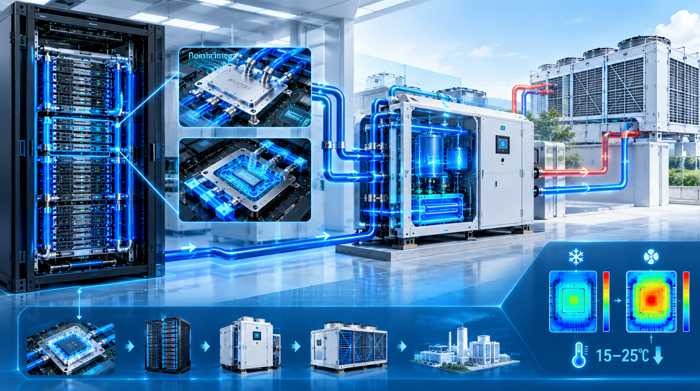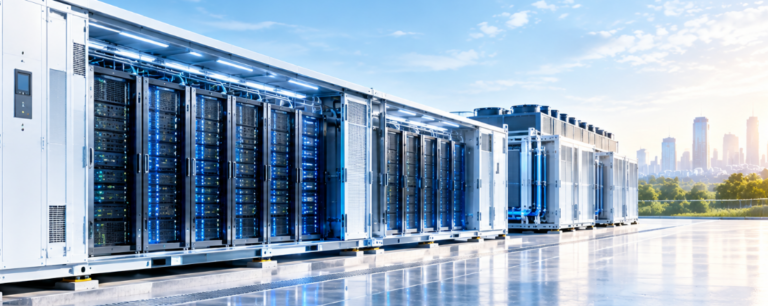


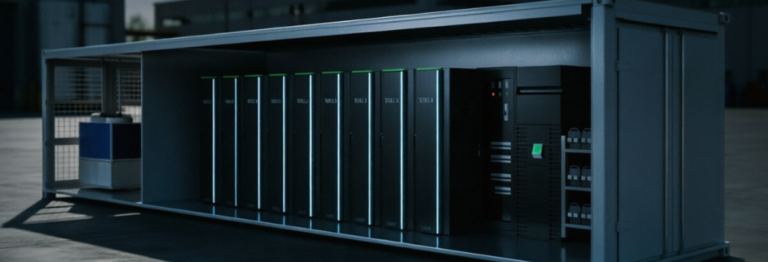
When you need to deploy IT capacity quickly, a traditional brick-and-mortar data center often becomes your biggest bottleneck. Construction permits, civil works, and complex cooling systems can delay your project for months or even years. That’s where a containerized data center changes the game.
By pre-integrating power, cooling, racks, and monitoring into a standard shipping container, this modular approach delivers a ready-to-run facility that simply plugs in where you need it. Below are the five most compelling advantages you gain by switching to a containerized data center solution.
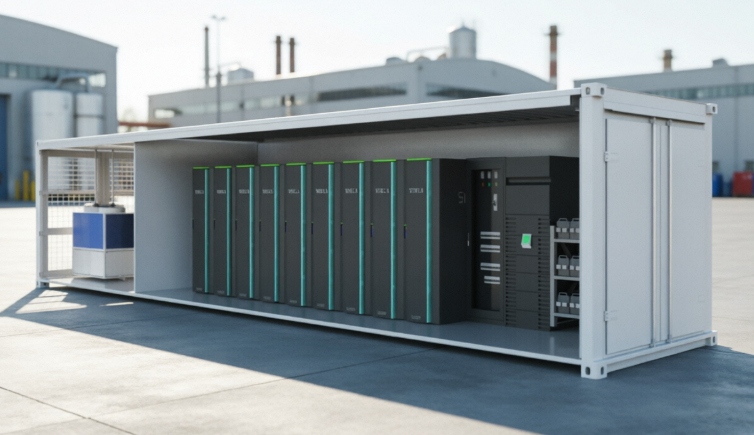
Containerized Data Center Speeds Deployment
Time-to-value matters more than ever. A conventional data center requires site preparation, building construction, and on-site assembly of every subsystem. In contrast, a containerized solution is factory-built and pre-tested before it even arrives at your location.
Why Rapid Deployment Matters for Your Business
You can go from order to operation in as little as 8–12 weeks. Once the container is delivered, you only need to connect power, network, and a water source (if liquid-cooled). This speed is a game-changer for edge computing, disaster recovery, and seasonal capacity spikes.
How a Containerized DC Delivers Unmatched Flexibility
Your computing needs rarely remain static. With a traditional data center, you often overbuild for future demand, tying up capital in unused space. A containerized data center flips that model.
Each container acts as an independent building block. Need more compute power? Add another 20ft or 40ft module. Moving to a new site? Reload the container onto a truck and redeploy. This modularity allows you to scale horizontally without redesigning your entire infrastructure.
Lower Total Cost of Ownership and Energy Efficiency
Let’s talk numbers. While the upfront cost of a containerized data center can be slightly higher than retrofitting an existing room, the long-term savings are substantial.
| Cost Factor | Traditional Data Center | Containerized Data Center |
|---|---|---|
| Building construction | High (real estate + permits) | None (container is the building) |
| Cooling efficiency | Often inefficient (hot/cold aisle issues) | Optimized with in-row or rear-door heat exchangers |
| Power usage effectiveness (PUE) | 1.8 – 2.2 typical | As low as 1.05 – 1.3 with free cooling |
| Labor for installation | Multiple contractors | Single vendor, integrated |
Many containerized units use outside air economizers or liquid cooling, slashing electricity bills. For you, that means a greener IT footprint and lower operational expenses year after year.costs.
Deploy a Containerized Data Center Anywhere
A conventional data center requires a climate-controlled building. A containerized data center comes with its own robust enclosure, allowing you to place compute power exactly where it’s needed.
Built for Tough Conditions
With high ingress protection ratings (IP55 or higher) and integrated thermal management, these solutions operate reliably in deserts, arctic sites, oil fields, or urban rooftops. Whether you need a portable data center for military applications or a permanent edge node in a factory, the container adapts to the environment, not the other way around.
Simplified Management and Vendor Accountability
You don’t want to juggle separate systems for power, cooling, and security. A containerized data center comes with a unified management platform that gives you complete visibility from day one.
Remote Monitoring and Automation
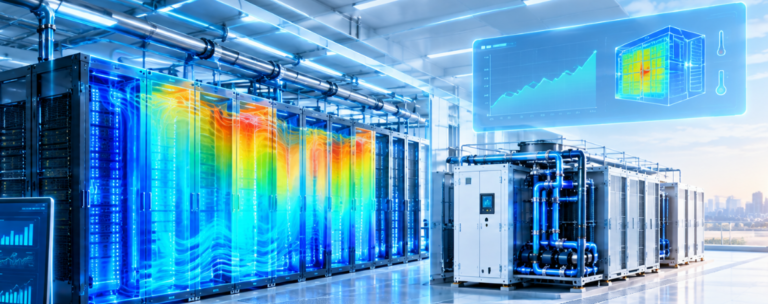
Most solutions include sensors for temperature, humidity, smoke, and access control, all feeding into a central dashboard. You can monitor and control your containerized data center from anywhere, set alerts, and automate responses to failures. This reduces on-site staff requirements and increases uptime.
Overcoming Common Concerns About Container DCs
You might have heard objections like “containers are less secure” or “they can’t match uptime.” Let’s clear those up.
Security and Physical Protection
Modern units come with reinforced steel doors, biometric locks, CCTV mounts, and tamper alarms. For perimeter security, you can place them inside a fenced yard or a warehouse — the same as any server room.
Uptime and Redundancy
Leading vendors offer N+1 or 2N configurations for cooling and power within the same container footprint. You can also pair two containers in an active-active setup. Tier III and even Tier IV designs are available, with documented uptime of 99.982% and higher.
Organizations Are Switching to Containerized Data Centers
From cloud providers to telecom operators, enterprises are recognizing that modular, pre-fabricated infrastructure is no longer a niche product—it’s the new standard for agility. Brands like SOETECK offer a range of models from air-cooled edge units to high-density liquid-cooled clusters that support up to 1MW per container. By choosing a containerized approach, you future-proof your IT against unpredictable growth and location constraints.
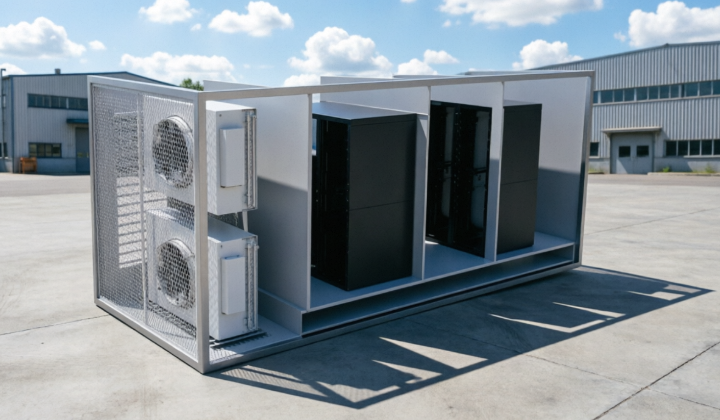
The Future Is Modular – And It Fits in a Shipping Container
You’ve seen the evidence: a containerized data center offers speed, scalability, cost savings, portability, and simpler management that traditional facilities struggle to match. Whether you’re a startup needing a lean first data center, an enterprise expanding to edge locations, or a government agency requiring ruggedized IT, this approach deserves serious evaluation.
Stop letting building construction delays or cooling inefficiencies hold your IT strategy back. The containerized revolution is here — and it’s ready for you to deploy.